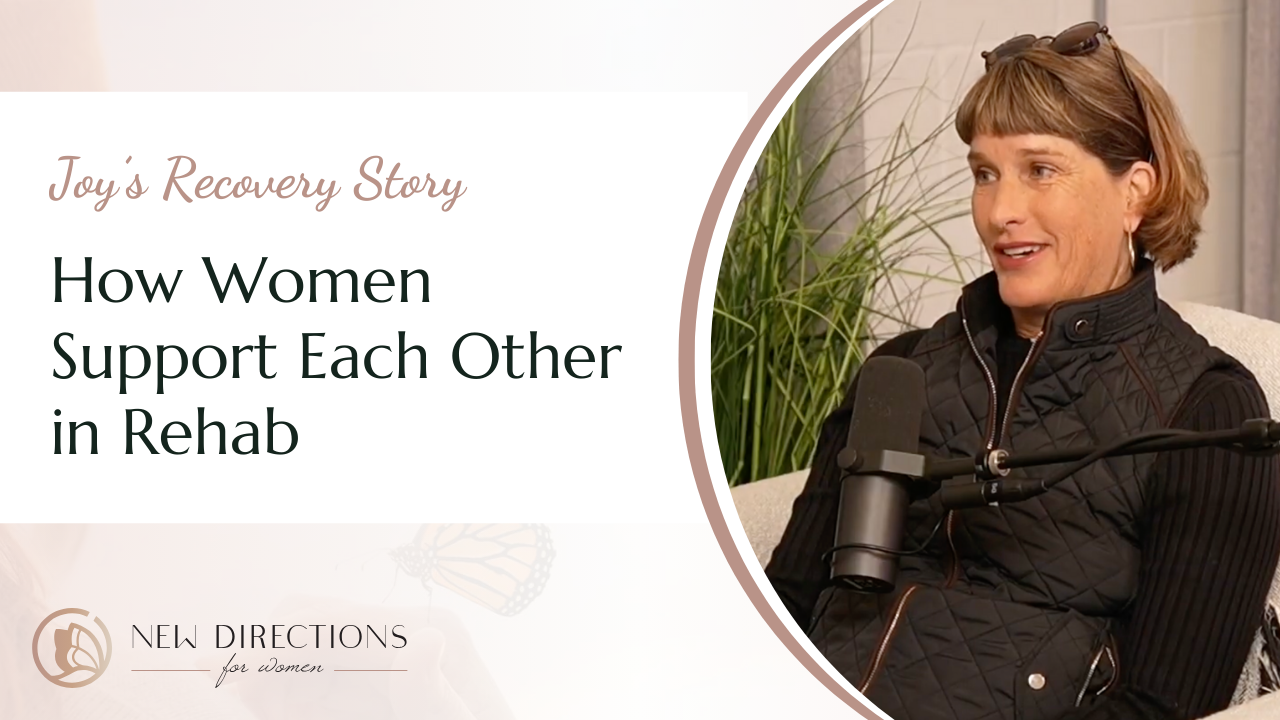
Watch the full interview with New Directions for Women alumna Joy to hear how community made an impact in her addiction recovery journey.
When women are struggling with alcohol or substance use, it can feel isolating. Many hide their struggles from family, friends, or colleagues, worrying about judgment or shame. For their loved ones, it can be equally painful to watch someone they care about struggle without knowing how to help. Community-based addiction treatment for women is uniquely designed to address these challenges by combining professional support with peer connection. Joy’s experience at New Directions for Women illustrates how a strong women’s addiction recovery community can transform lives.
Finding Connection in a Women-Only Rehab Program
Joy arrived at New Directions feeling uncertain and vulnerable, unsure if she would fit in or feel understood. She quickly realized that the women-only environment created a sense of belonging that was essential to her recovery.
“Actually, yes—both the support staff as well as the women in treatment were just so welcoming, just very inclusive. I really liked that there seemed to be more than just a patient-client dynamic. It felt personalized, even though it’s not completely personalized. The other patients that were there, the other women in the program… we came from all different backgrounds, all different areas, all different parts of the U.S. And it didn’t matter. Everybody was so helpful.”
Joy emphasizes that this community wasn’t just about camaraderie—it was integral to her healing process. “Yeah, very big community. I had said one time that I really felt like without being in treatment, I would have loved just living there. It is that beautiful of a space. There’s something magical about the property for sure.”
How Peer Support Accelerates Recovery
One of the most powerful aspects of women-only rehab programs is the peer support built into every part of the day. From group therapy sessions to shared activities, women learn from and encourage each other in ways that are difficult to replicate elsewhere.
“I really liked that there was routine, that there were tasks and things to do. Having a program that I could rely on at three o’clock, then get the dishes done before the evening program—it was very good for me. But the other women, they were so supportive. We helped each other, encouraged each other, and shared our experiences.”
For women in recovery, hearing others’ stories and knowing they are not alone can reduce shame, increase accountability, and create motivation. Joy describes how this type of peer support shaped her journey.
“I never felt judged. Even though I probably was one of the oldest women there at the time, it didn’t matter. I connected with a 21-year-old just as easily as I did with women my age. We were all supporting each other.”
Group Therapy for Women With Addiction
Group therapy is a core element of the program, allowing women to discuss challenges, celebrate victories, and learn new coping strategies in a safe space. Joy found these sessions particularly transformative.
“I really enjoyed the times where we were in learning, like the background—the medical background of alcoholism. Because that’s so much that’s not out there. And it was fascinating for me to see how the mind works, how the brain works, and the combination of it. The other programming, like movement, yoga, play, and sound baths… they all brought so much to the group.”
Group therapy doesn’t just focus on education—it also emphasizes shared experience and emotional support, which helps women feel validated and understood.
“Everyone that had any of the different programs with anybody there brought so much to the group. I loved Victoria’s Wellbriety. I’m still doing the Wellbriety each morning at home. It spoke to me because my uncle had a group in Phoenix, and I hadn’t realized until going to New Directions why I felt drawn to it.”
Women Supporting Women in Recovery
Joy highlights the ongoing support that women offer each other, even after completing the program. This kind of enduring connection is a hallmark of a strong women’s addiction recovery community.
“I really enjoy the weekly alumni meetings. A lot of the alumni come back, and we have a meeting with the current residents. It’s nice to be able to show that I’ve recovered, that I am thriving, but I can also share whatever’s troubling me—or even cry on someone’s shoulder if I need to. It’s such a safe, non-judgmental space. I look forward to Thursday nights.”
These relationships help maintain sobriety long-term. For women leaving rehab, peer support is often what bridges the gap between structured treatment and life back at home. “I reach out to other alcoholic women in the program, meet up with them, send little notes of encouragement. I have a very strong program, one that I’m willing to keep and maintain.”
Why Community-Based Addiction Treatment for Women Works
Joy’s story underscores why community-based addiction treatment for women is so effective: it combines professional care with meaningful peer connections. Women learn not only about addiction and recovery, but also about themselves, their resilience, and how to support others.
“Even though we came from different backgrounds and life experiences, it didn’t matter. The relationships I formed there… I have formed such good relationships with so many of the women still six months later.”
By fostering a safe, supportive, and structured environment, women-only rehab programs help women build the skills, confidence, and connections they need to thrive in recovery.
Take the Next Step Toward a Women’s Addiction Recovery Community
If you or a loved one is struggling with alcohol or substance use, connecting with a women-only addiction recovery community can be life-changing. New Directions for Women offers a supportive, peer-driven environment with group therapy and structured programs designed to help women heal, build connection, and maintain long-term sobriety.
Take the first step today. Contact our team to learn more about our Orange County women’s rehab center and how we help women build lasting recovery through community, support, and empowerment.